

The problem is never finding a Bible cover. It is finding one that fits the Bible you already love. I have watched women in my Wednesday-night group come home with a cover that is too small, so the flap gapes and the corners poke through, or one that is so roomy their Bible slides around inside like a loose book in a box. After 11 years of leading a Bible study around my kitchen table, I have learned that the right cover starts with the right measurements, not the prettiest pattern on the shelf.
That is why I keep recommending the Montana West Bible cover to the women in my group. It comes in a range of sizes, it has a leather bookmark so you never lose your place, and it closes like a proper book case instead of flopping open in a tote bag. But before you buy any cover, including this one, you need to know your Bible's numbers. Here is the whole process, step by step, the way I would walk you through it at my kitchen table.
The cover I point everyone to first
The Montana West Bible cover has an attached leather bookmark, a book case style that closes all the way around, and a handle that makes it easy to carry. Measure your Bible, match it to the size chart, and see today's price and the available sizes on Amazon.
Amazon Check Today's Price on Amazon →Why Fit Matters More Than You'd Think
A cover that fits does two quiet jobs. It holds the Bible closed so the pages stay flat and the spine does not crack, and it keeps the book from shifting when you carry it. A cover that is too small presses on the binding every time you close it. A cover that is too big lets the Bible knock around, and over a year of tote bags and car seats that adds up to bent corners and loosened pages.
There is also the everyday part. My Bible lives on my kitchen table, where I study in the morning with coffee. One spilled mug is all it takes to ruin a page you have marked up for years. A cover gives you a place to put the Bible away at the end of the morning, protected from crumbs and spills and the stack of mail that always lands on top of it.
The other thing I have learned is that a cover is not just for travel. Even if your Bible never leaves the house, a cover keeps the pages together and the binding safe. My old study Bible has been opened and closed thousands of times, and the cover is what keeps it from coming apart at the seams.
Step 1: Measure Your Bible Before You Look at Anything Else
Lay your Bible flat on the table and take three measurements. The height, from the top of the front cover to the bottom. The width, from the edge of the front cover to the edge of the back cover. And the spine, which is the part people forget. For a thick study Bible, the spine can be an inch and a half or more, and it is the number that decides whether a cover closes comfortably.
Write the numbers down. Then look at the size chart for any cover you are considering. The Montana West cover, like most good ones, comes in several sizes, and the listing tells you the dimensions each one fits. Trust the numbers on the chart, not the photo on the package. If the height and width fit but the spine is at the very top of the range, expect a snug close. Snug is good. A cover that closes with effort will wear out the zipper or the flap over time.
If you are between sizes, go up, not down. A cover that is a half inch too big will still hold the Bible securely, especially if it closes around the edges. A cover that is a half inch too small will fight you every single time, and you will stop using it.
Step 2: Pick a Style That Matches How You Study
Bible covers come in three basic styles, and your study habits should pick the style for you. A zippered book case wraps all the way around the Bible and is the best protection for anyone who carries a Bible in a tote bag or a backpack. A flap cover, sometimes called a wallet style, is lighter and easier to open one-handed, but it leaves the edges of the pages exposed. A sleeve is the simplest of all, but you have to pull the Bible out entirely to read it, which means it spends most of its time out of the cover anyway.
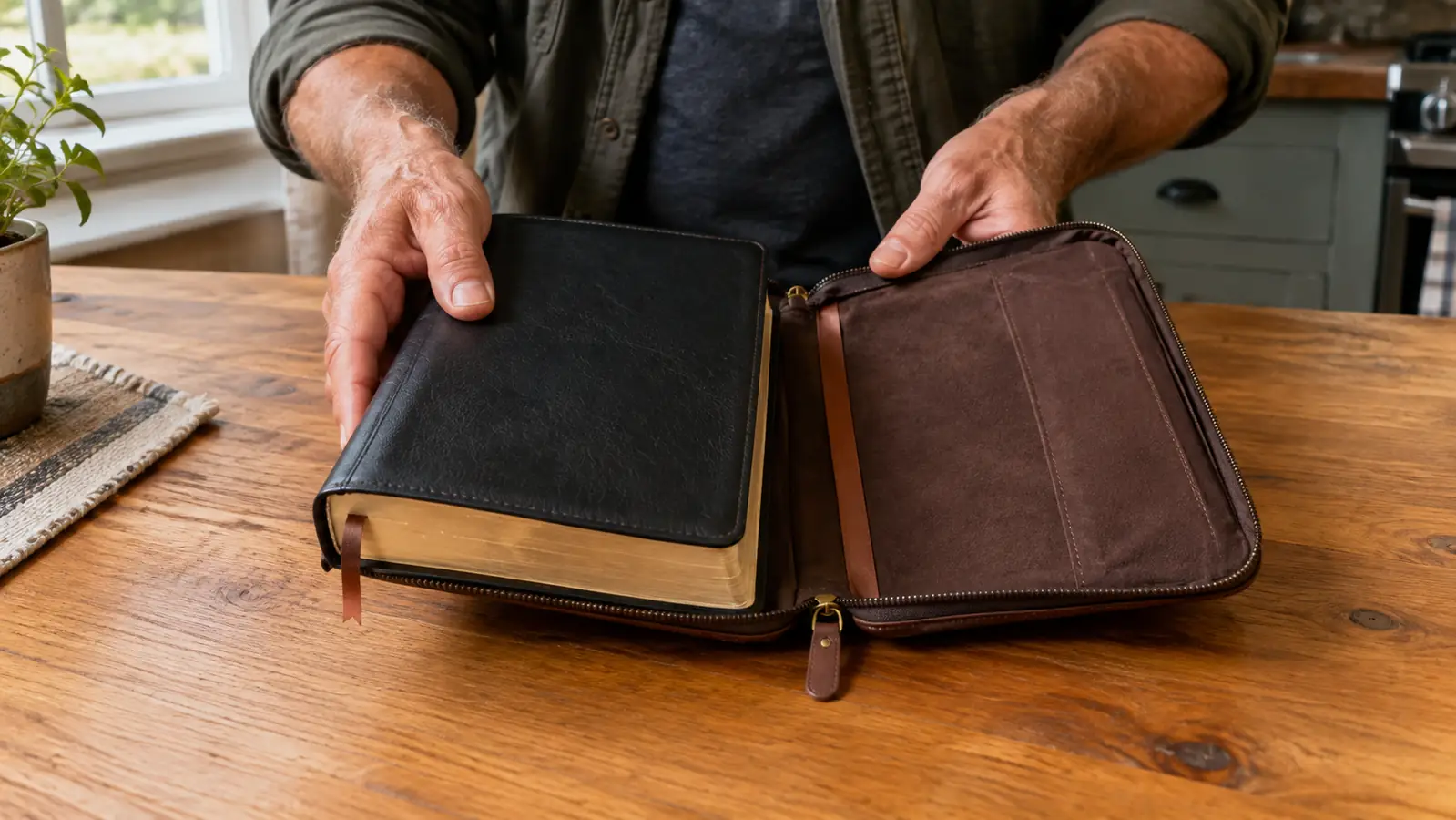
I am a book case person. My Bible goes to church on Wednesday nights, to the kitchen table every morning, and into a tote bag in between. The Montana West cover closes like a book case, so the pages are protected on every side, and it has a handle, which I will talk about in a minute. If you mostly study at home and never carry the Bible anywhere, a lighter flap cover might suit you fine. Be honest about where your Bible actually goes.
One more style note. A cover with a handle is worth it if you carry your Bible separately, but if it always rides inside a bigger bag, the handle can get in the way. Think about how you actually carry things before you decide.
Step 3: Check the Closure and the Handle
The closure is the part that wears out first, so look at it before you buy. A zipper should run smoothly and have a sturdy pull. A flap should close with a snap or a strap that lines up easily, not one you have to wrestle with. And the handle, if the cover has one, should be attached to the cover itself, not to a thin loop that will pull loose. I have seen handles tear off after a few months of weekly use, and it is a sad sight.
The Montana West cover has a handle attached to the book case, and the leather bookmark is attached inside, so it stays with the Bible instead of sliding out like a loose ribbon. Those are the details I check for now. A loose ribbon bookmark has disappeared from more than one Bible in my group, and the women end up using a receipt to mark their place.
And check the inside before you buy. Some covers have a pocket on the inside flap, which is a handy place for a pen and a small notebook. Others are plain. Neither is wrong, but knowing which one you are getting saves you a surprise later.
Step 4: Think About Where the Bible Lives
The best cover is the one that fits the places your Bible goes. For me, that is the kitchen table in the morning, the back seat of the car on Wednesday afternoons, and the table at church that night. That means I want something that closes fully, so the pages stay clean, and something that is easy to grab on the way out the door.
If you study mostly at home, your priorities are different. You might want a cover that opens flat and stays open, so you can set it beside your coffee and read without holding it. You might not need a handle at all. And if you carry your Bible in a bag that already has a pocket for it, a slimmer cover will fit better than a padded one. Match the cover to the routine, not to the photo on the package.
One more thing about the car. If you set your Bible on the passenger seat, a cover with a handle is easier to grab when you park. If it slides under the seat, at least the cover keeps it clean until you fish it out. I speak from experience on both counts.
Step 5: Look at the Small Things That Matter Over Time
After the size and the style, the small details decide whether a cover still serves you a year from now. A bookmark that is attached to the cover means you never lose your place. An inside pocket gives you a home for the bulletin, the reading glasses, or the little notebook you jot questions in. And the material matters. A cover that wipes clean will survive coffee rings and rain, while a fabric cover will show every mark.
The Montana West cover checks those boxes for me. The attached leather bookmark is the feature the women in my group mention most, because nobody has to hunt for a ribbon again. And because it closes all the way around, the pages stay flat and clean. Those are the small things that make a cover worth owning, and they are the same things I would tell you to look for in any cover, whatever brand you choose.
And do not forget the bookmark. It sounds like a small thing, but it is the feature I hear about most from the women in my group. A ribbon that is sewn in stays put. A loose one ends up on the floor of the car. The leather bookmark on the Montana West cover is attached, so it is always right there when you close the Bible.
How to Tell If a Cover Really Fits
Here is the test I use. Put the Bible in the cover, close it, and hold it up. The cover should close without straining, the Bible should not slide around when you tilt it, and the corners should not poke through the top or the bottom. Then set it down and open it. If you have to fight the cover to get at the pages, it is the wrong cover, no matter how nice it looks.
Give any new cover a one-week trial. Carry it to church, study with it at home, put it in your bag. By the end of the week you will know whether it fits your routine or just your shelf. Most of the women in my group figure it out by the first Wednesday night.
The same test works if you are buying for a gift. A cover for someone else's Bible is a gamble unless you know the size, so measure their Bible when they are not looking, or ask. I have given covers as gifts, and the ones that fit are the ones that get used.
What Else Helps
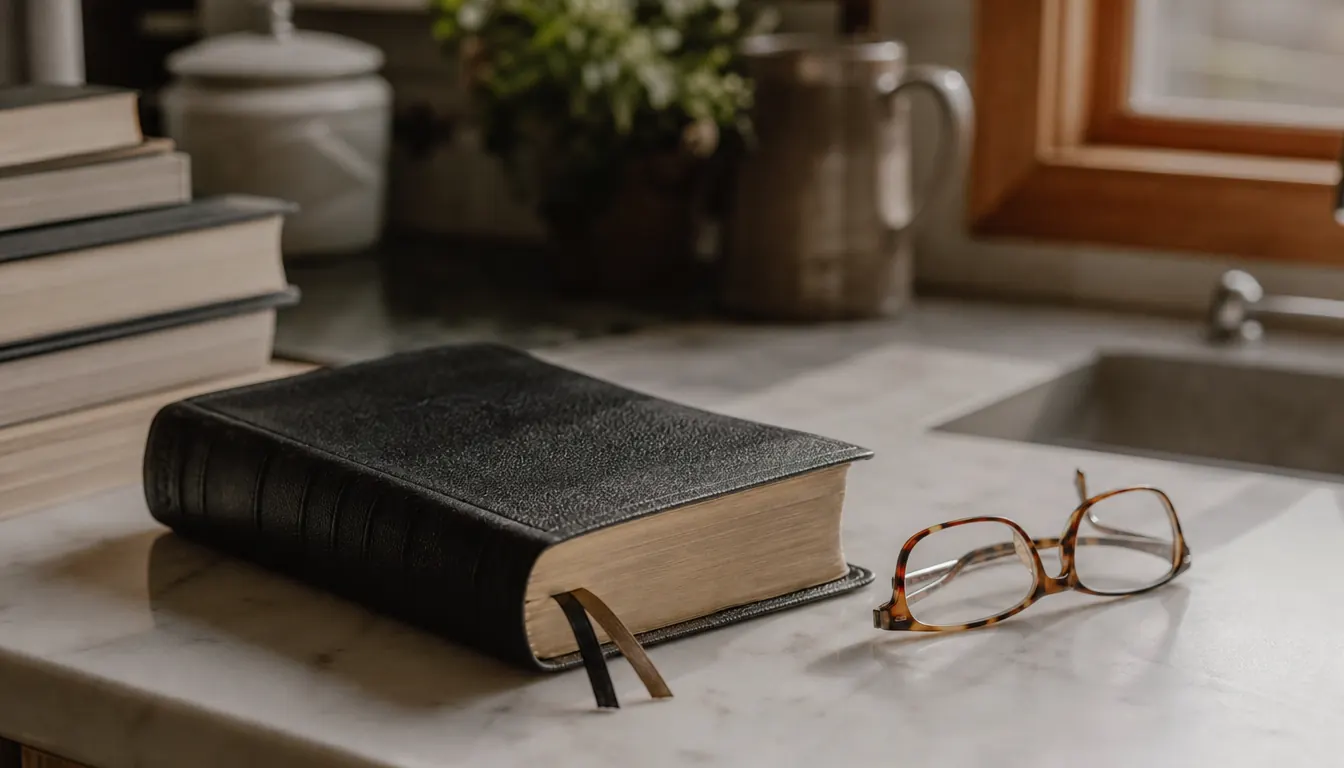
A cover is the start, not the whole solution. A small book light that clips to the cover helps my eyes in the evening, and a sturdy tote bag with a flat bottom keeps the Bible upright in the car. I also keep page tabs and a fine-point pen tucked in with my Bible, so everything I need for the study is in one place. None of that is fancy, but it is what makes the habit easy to keep up.
One warning, and it is a small one. A padded cover protects better, but it also takes up more room in a bag. If you carry a small purse, look for a slimmer cover. The Montana West cover sits in the middle, sturdy without being bulky, which is why it works for the women in my group who carry everything in one bag.
And if you mark up your Bible as you study, keep a pencil close by. I use a fine-point pen that does not bleed through thin pages, and I sharpen it before the group comes over on Wednesday nights. Small habits, but they keep the study moving.
A cover that is a half inch too small will fight you every single time, and you will stop using it. The measurements are the whole difference.
Ready to find the cover that fits?
Measure your Bible, match it to the size chart, and the Montana West cover will close around it like it was made for it. See today's price and the available sizes on Amazon.
Amazon Check Today's Price on Amazon →