

I have a confession to make about my old study Bible: the spine is held together with two strips of book tape, and the corners are worn soft and rounded from years of use. It has served me well, but it shows every one of those years. When I finally admitted I needed a cover, I spent a long time comparing options, and the Montana West Bible cover is the one I keep reaching for. After months of Wednesday nights and morning coffee, here are ten reasons a good cover protects a study Bible, and why this one earns its place on my kitchen table.
A study Bible is different from a paperback you read once. It is heavy, you write in it, you carry it to church and to other people's houses, and you expect it to last for years. A cover is not about keeping it pretty for a shelf. It is about keeping the pages usable so you can actually find the verse you marked three years ago.
The cover I trust with my study Bible
Montana West's Bible cover adds a layer of protection for the way a study Bible actually gets used: carried, opened flat, marked up, and read every single day. See today's price on Amazon and decide if it fits your routine.
Amazon Check Today's Price on Amazon →The 10 Reasons
I have used this cover long enough to see what it actually does and what it does not do. Here is what I would tell a friend who is trying to decide, in the order I would say it.
It protects the spine, the part that fails first
Every study Bible I have owned has eventually died the same way. The spine cracks, the pages start pulling away from the binding, and suddenly the whole book flops open to the middle of Matthew whether you want it to or not. A cover holds the book snugly, so the spine is not flexing and straining every time you pick it up or set it down. My old Bible needed book tape after about six years of hard use. The one in this cover shows no signs of that yet, and that is exactly the point.
It keeps the corners from curling and splitting
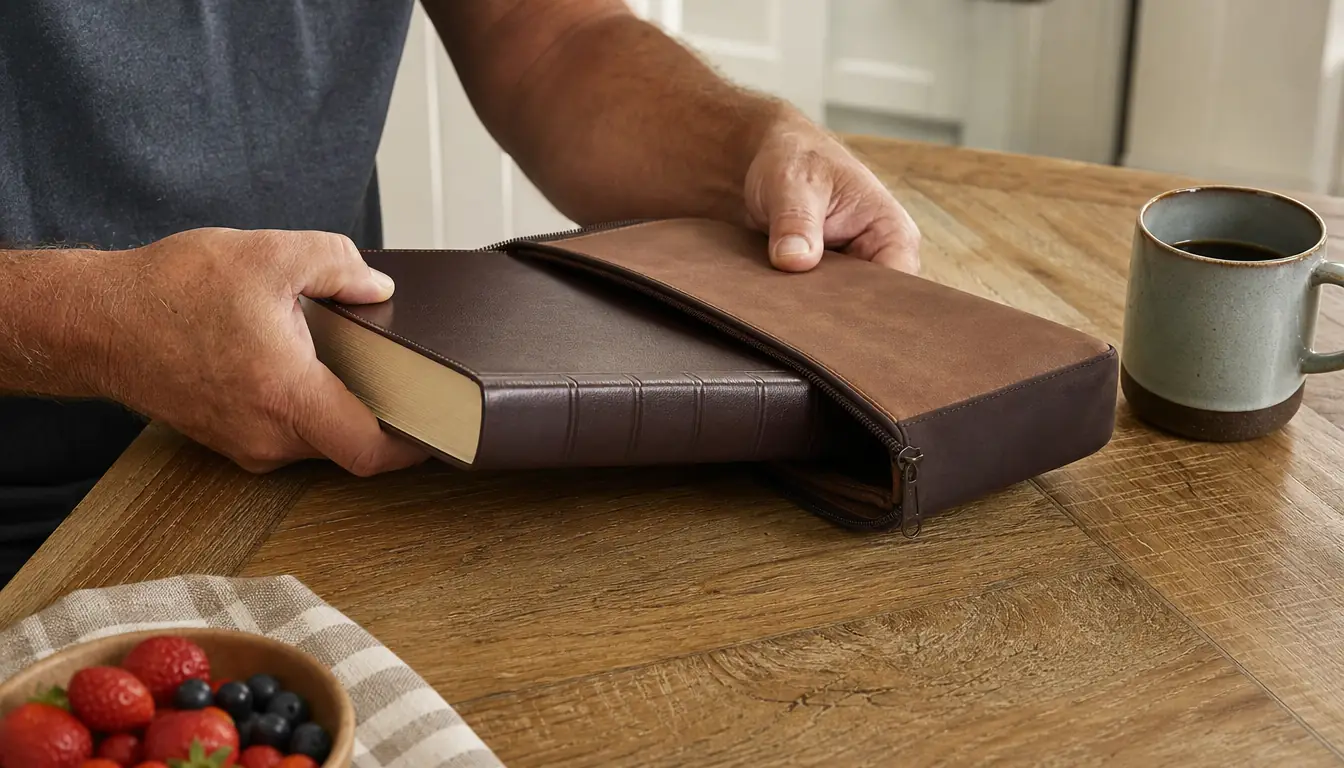
Study Bibles are heavy, and heavy books take a beating at the corners. They get dropped on the floor of the car, shoved into a tote bag next to a water bottle, and set down hard on a table at the church fellowship hall. The corners of a cover take that abuse instead of the Bible's own cover. It sounds like a small thing until you see a friend's Bible with the corners worn down to the cardboard. Corners are the first thing to go, and they are the easiest to protect.
It guards the thin pages that tear so easily
Bible paper is thin for a reason. If the pages were regular book weight, the volume would be too thick to hold comfortably. But thin pages tear, and they tear in the most frustrating places, right at the edge of a verse you need. A cover keeps the pages pressed together and protects the edges from whatever else is in your bag. I have stopped finding little tears that were not there the week before. That alone has saved me more frustration than I expected.
It gives you a fighting chance against coffee
I do my studying at the kitchen table with a mug of coffee, and I will not pretend spills never happen. A cover is not waterproof, and I am not going to tell you it is. But it is the first line of defense. The flap and the material catch a splash that would otherwise land straight on the pages, and they give you the seconds you need to grab a cloth. For anyone who reads with coffee within reach, that alone is worth it.
It keeps your place with the leather bookmark
This cover comes with a leather bookmark attached, which sounds like a small thing until you are holding your Bible in one hand and a plate of cookies in the other on Wednesday night. I used to lose the scraps of paper I used as markers, and I would spend the first five minutes of our study hunting for the right page. Now I close the cover and my place is right there, every single time. It is the small feature I did not expect to depend on.
It protects your margins from your own pens
I have taken up hand lettering in the margins of a journaling Bible over the last few years, and I learned the hard way that pens and Bibles in a bag do not mix. A cover keeps pens, highlighters, and the little mechanical pencils I use from rubbing against the pages. The interior pocket gives them a home where they cannot do damage. If you write in your Bible, you already know the feeling of opening it to find a pen mark that was not there before.
It makes the trip to church easier on the book
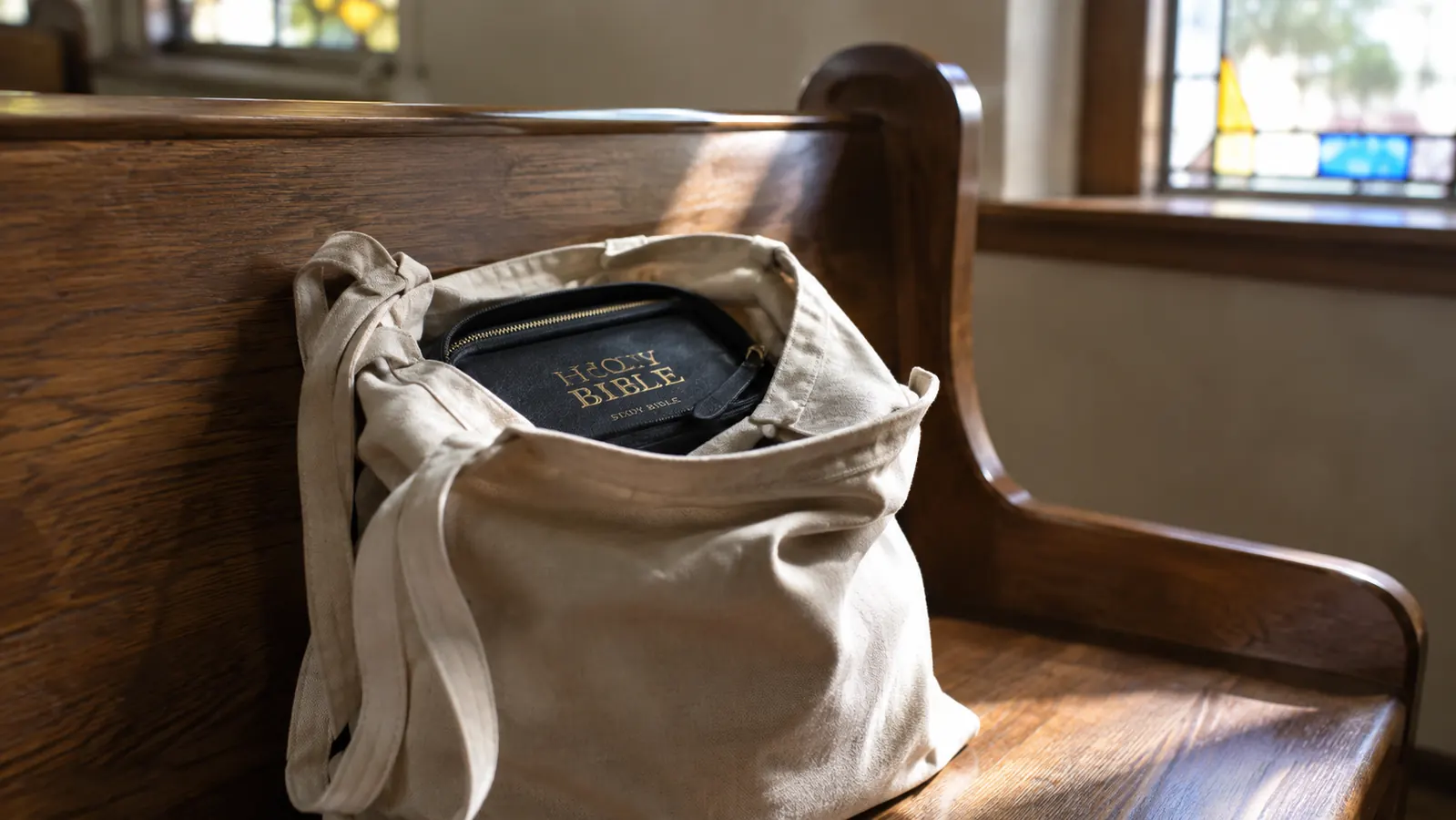
Wednesday nights mean my Bible goes from the kitchen table to the car to the church and back again, usually in the same tote bag as my dish for the potluck. A bare Bible gets knocked around in that bag. The Montana West cover adds a layer that absorbs the bumps, and the handle makes it easy to carry the Bible on its own when I do not want to haul the whole bag inside. It is the difference between arriving ready and arriving with a jumbled mess.
It keeps the cover clean from everyday hands
We pass Bibles around in our group when someone reads a passage aloud, and hands carry oils and dirt that darken a cover over time. The material on this Montana West cover wipes clean easily, which is more than I can say for the cloth cover on my old Bible. After months of Wednesday nights, it still looks presentable. I am not precious about my things, but there is something nice about a Bible that does not look like it was stored in a barn.
It holds everything together so the book stays organized
Between the bookmark and the interior pockets, everything I need lives with the Bible instead of scattered around the house. Reading glasses, a pen, the week's reading list, they all have a spot. When I sit down on Wednesday morning to prepare for the evening, I am not hunting for anything. That quiet organization matters more as I get older. The less time I spend looking for my glasses, the more time I spend actually studying.
It helps a Bible you love actually last
The real reason to use a cover is simple. The longer your Bible lasts, the more it becomes part of your study. Margins fill up, passages get underlined, and the book starts to feel like an old friend. Protecting it is not about keeping it perfect on a shelf. It is about keeping it usable for the next ten years, so the notes you make this year are still there when you need them. That is the whole argument in one sentence.
What I'd Skip
I will be honest with you, because you deserve it. If your Bible stays on a shelf and you read it in one spot, a cover is probably not a need. It adds a little bulk and a little weight, and if you never carry the book anywhere, you may not notice the difference. I would also skip it if you love the feel of a bare leather Bible in your hands. A cover changes that feel, and some people genuinely do not like it. There is nothing wrong with that. Buy a cover because you carry your Bible, not because you think you are supposed to have one.
My old Bible needed book tape after six years. The one in this cover still looks presentable after months of Wednesday nights.
Give your study Bible the protection it deserves
Montana West's cover protects the spine, the corners, the pages, and your place in the book, for the way a study Bible really gets used. Check today's price on Amazon and see if it fits your routine.
Amazon Check Today's Price on Amazon →