

I have led a Wednesday night women's Bible study at my church for 11 years, and for most of that time I studied from the same worn study Bible I have owned for ages. It has served me well, but when I started taking up watercolor and hand lettering a few years ago, I found myself wanting room to write. I wanted a Bible where the margins were wide enough for more than a single scribbled word. So I ordered the ESV Journaling Bible from Crossway, and I have used it nearly every morning at my kitchen table since it arrived. This is what months of real use look like.
I will be honest: I did not expect a journaling Bible to become my main study companion. I expected it to be a pretty notebook with scripture in it. What surprised me is how much the layout changed the way I prepare for our group. I am not here to promise that any Bible will transform your study habits. I am here to tell you what this one actually does, what it does not do, and who I think it genuinely suits.
The Quick Verdict
A well-made journaling Bible with genuinely wide margins, sturdy binding, and readable print, best for people who actually write in their Bibles. It is not the thinnest or most portable option, and the cloth cover needs a little care.
Amazon Check Today's Price →The journaling Bible I reach for every single morning
If you have been looking for a Bible with room to write, this is the one that has held up through months of daily use at my kitchen table. It is worth checking today's price on Amazon before you settle for a cheaper option.
Amazon Check Today's Price on Amazon →How I've Used It
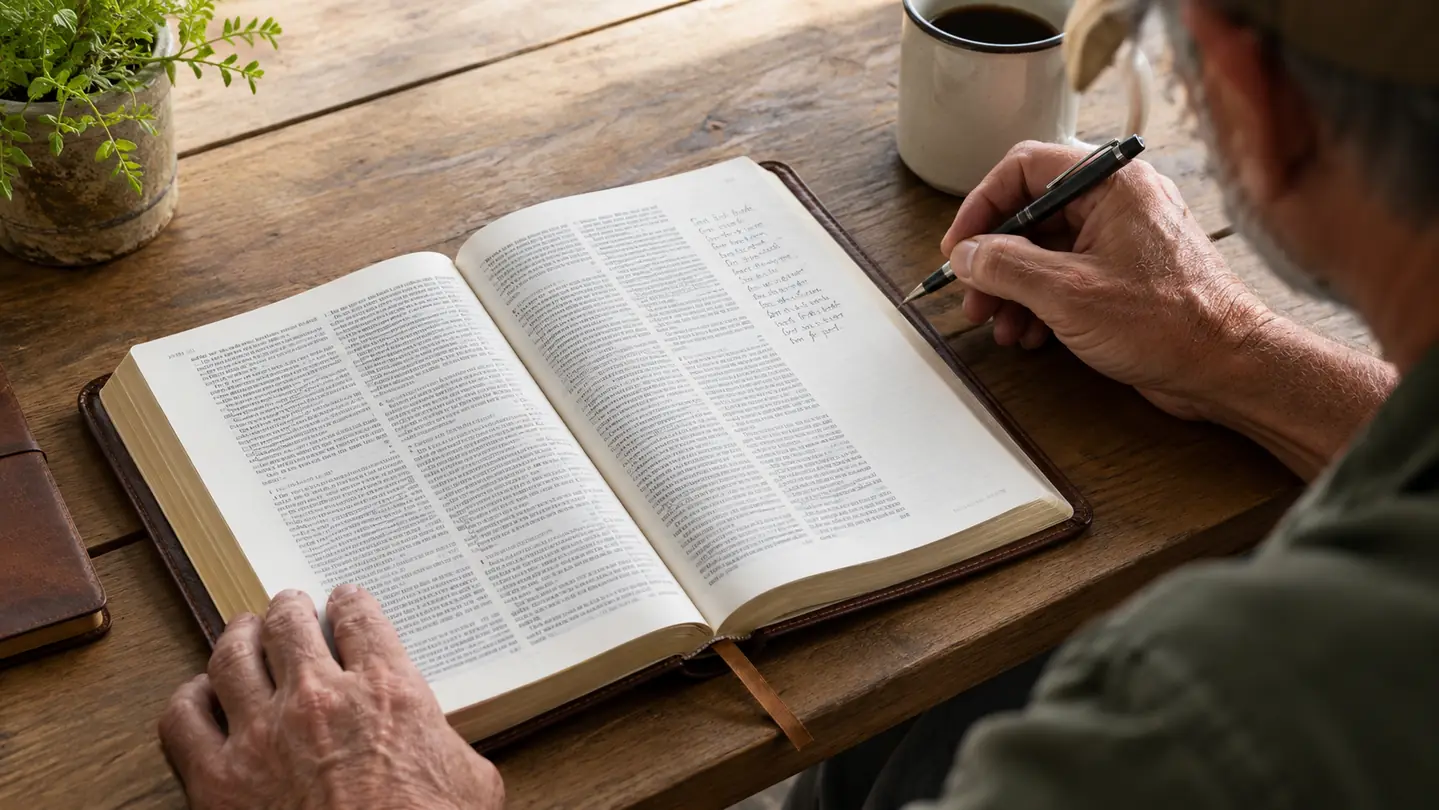
I have used this ESV Journaling Bible from Crossway every morning for roughly six months. That is more than 180 mornings of reading, underlining, and writing in the margins before the rest of the house wakes up. I have also carried it to my Wednesday night women's Bible study, to a weekend retreat, and on a long car trip to visit our grown children. It has been dropped once on a tile floor, shoved into a tote bag more times than I can count, and left open on the kitchen table overnight more often than I should admit.
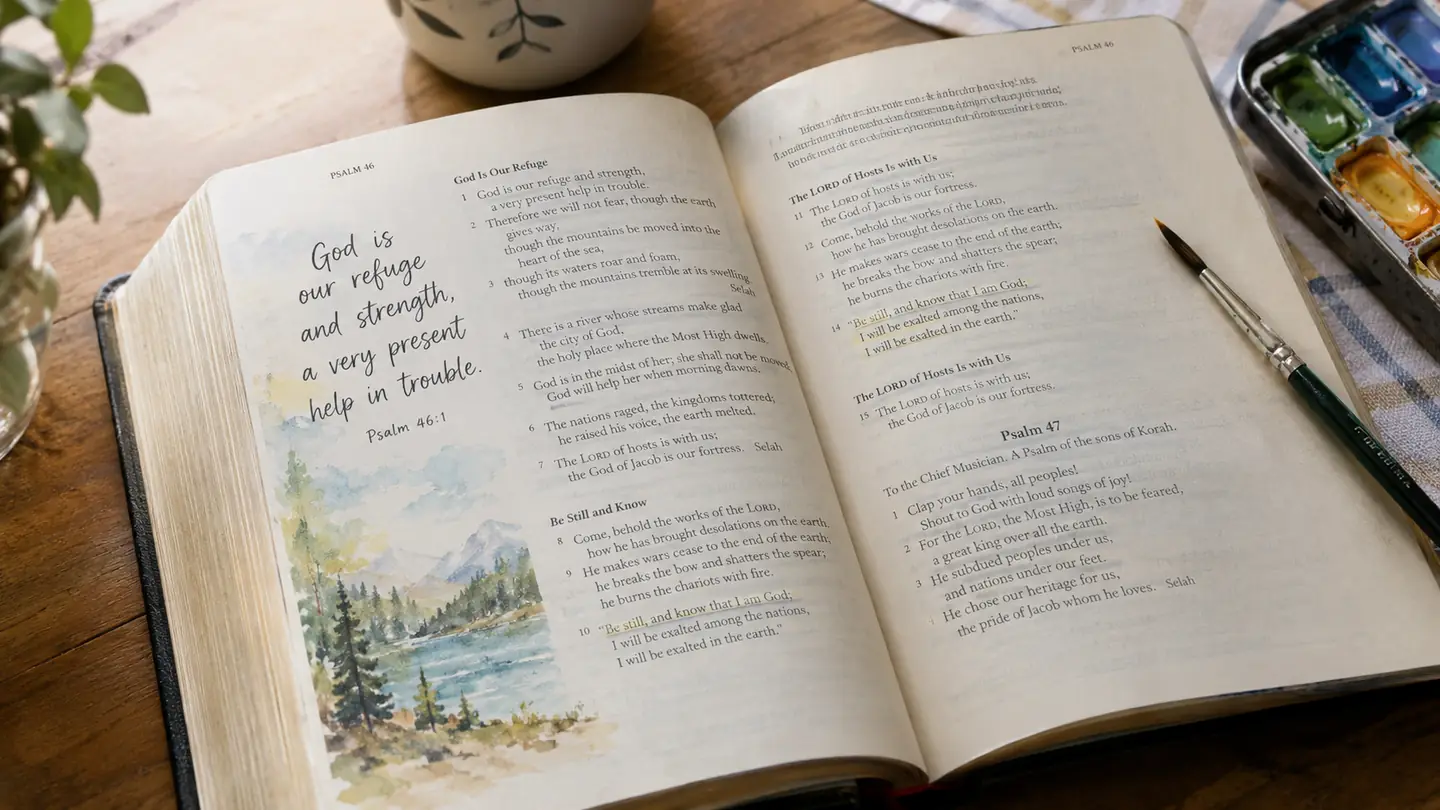
My routine is simple. I pour coffee, sit down at the table, and read the passage we are covering the following Wednesday. Then I write. Sometimes that means a few lines of notes in the margin. Sometimes it means a small hand-lettered verse that I have been practicing in my watercolor notebook. The point is that the writing and the reading happen in the same place, and for me that has made all the difference in how well I remember what I have studied.
I want to be clear about what I did not do. I did not use this as my only Bible from day one. I kept my old study Bible nearby for cross references and commentary. But by the third month, I found myself reaching for the journaling Bible first almost every morning. The study Bible still has its place on my shelf, but the Crossway journaling edition has become the one I actually live in.
The women in my study group have noticed the difference too. A few of them have asked to see the margins, and two have ordered their own journaling Bibles since I brought mine to the table. I do not think that is because I am a persuasive teacher. I think it is because they saw that writing in the margins was possible, and they wanted to try it themselves.
What the Wide Margins Actually Feel Like
The main reason anyone buys a journaling Bible is the margins, so let me talk about them honestly. The margins in this Crossway edition are wide enough for real writing, not just a few cramped words. I can write a full sentence of commentary beside most verses, and on many pages I can fit a short paragraph. For someone like me who wears reading glasses and writes in a fairly loose hand, that matters more than I can say.
The paper handles ink well. I have used a fine-tip ballpoint pen, a gel pen, and a fountain pen with waterproof ink, and none of them bled through badly enough to ruin the next page. There is some ghosting, which is normal for any Bible with thin pages, but it is light and does not interfere with reading. I have also used a small watercolor wash in the margin on a few pages, and the paper held up better than I expected. It wrinkled slightly, but it did not tear, and the text on the other side stayed readable.
One thing I learned the hard way: let the ink dry before you close the Bible. I ruined a margin note early on by closing the page too soon and smudging a verse I had just lettered. That is not a flaw in the Bible itself. It is simply the nature of writing on thin Bible paper, and it is worth knowing before you start.
I should also mention that the margins are consistent throughout the whole Bible. Some journaling editions give you wide margins on some pages and narrow ones on others, depending on the layout. This one does not. Every page I have turned to has given me the same generous space, which makes it easy to plan a lettering project without worrying that the next page will be too cramped.
I can write a full sentence of commentary beside most verses, and on many pages I can fit a short paragraph. For someone who wears reading glasses, that matters more than I can say.
The Binding, the Cover, and Everyday Wear
A Bible that lives on a kitchen table gets handled a lot. It gets opened flat, closed, stacked under a notebook, and carried in a tote bag. After six months, the binding on this Crossway journaling Bible is still tight. The pages lay flat when I open it, which is the single most important quality for a Bible you plan to write in. Some Bibles fight you when you try to keep them open to a page. This one does not.
The cloth over board cover is soft and pleasant to hold, and the design on the front is pretty without being fussy. I will say plainly that cloth is not as durable as leather. I have a small scuff on one corner from the drop on the tile floor, and the cloth shows fingerprints more than a leather cover would. If you plan to toss this Bible into a bag every day, you may want a cover or a sleeve. I keep mine on the kitchen table most of the time, so it has not been a problem for me.
The print size is another thing I want to be honest about. This is not a large print Bible. The type is readable, and with my reading glasses I have no trouble at all, but if you need large print without glasses, you will find this edition small. I would not recommend it for someone with significant vision challenges. For me, at my kitchen table in good morning light, it is perfectly comfortable.
How the ESV Translation Reads in Daily Use
I have studied from several translations over the years, and the English Standard Version has become my favorite for group study. It reads with a dignity that suits scripture, but it does not feel stiff or dated. When I read a passage aloud at our Wednesday night study, the women in the group follow along easily. The language is clear enough for a new believer and deep enough for someone who has studied for decades.
Crossway has done something smart with this edition: they have kept the text clean and uncluttered, with no cross references running down the center of the page. That means the column of scripture is uninterrupted and the margins stay wide. Some study Bibles pack the page with notes and references, which is wonderful for research but leaves no room for your own thoughts. This Bible makes a deliberate choice, and it is the right one for a journaling edition.
I will add one small caution. Because there are no cross references in the margins, I sometimes find myself wishing I had my old study Bible handy when I want to chase a theme across the whole Bible. That is not a criticism of this edition. It is a tradeoff, and it is exactly the tradeoff I expected when I bought a journaling Bible instead of a study Bible.
Alternatives I Considered
Before I settled on this Crossway edition, I looked at a few other journaling Bibles. The most common alternative is a wide margin Bible with a standard translation, but most of those still did not give me the space I wanted for lettering. I also considered a cheaper journaling Bible from another publisher, but the paper felt thin and the margins were narrower. I am glad I waited and ordered this one instead.
I also thought about buying a separate journal and keeping it beside my Bible, which is what I had done for years. The problem was that I rarely went back to read what I had written. The journal stayed on the shelf while my Bible stayed on the table. Having the notes in the same book as the scripture changed that for me, and it is the main reason I would choose a journaling Bible over the notebook approach.
If you are comparing this to a study Bible, understand that they are different tools. A study Bible gives you commentary and cross references. This journaling Bible gives you space for your own commentary. I own both, and I use them differently. If I had to choose only one, I would still choose the journaling edition, because the notes I write myself are the ones I remember.
One more thing worth knowing: the ESV is a word for word translation, which means it stays very close to the original language. That is important to me because I lead a study group and I want to be sure I am teaching what the text actually says. It is also why I chose this translation over a more paraphrased version for my journaling Bible.
What I Liked
- Wide margins that fit full sentences and short paragraphs
- Pages lay flat, which makes writing in them much easier
- Paper handles pen and light watercolor without bleeding through
- Clean text with no cross references cluttering the page
- Binding stayed tight through six months of daily use
Where It Falls Short
- Cloth cover shows wear and fingerprints more than leather
- Not a large print edition, so it may not suit failing eyesight
- No cross references in the margins, so you may want a study Bible nearby
- Thin Bible paper means you must let ink dry before closing
Who This Is For
This ESV Journaling Bible from Crossway is for people who actually write while they read. If you already keep a notebook beside your Bible, or if you have always wished you could write in the margins but found the space too small, this edition will feel like it was made for you. It is also a wonderful choice for anyone who wants to practice hand lettering or watercolor on scripture verses, because the margins give you room to make mistakes and try again.
It suits a small group leader like me, because the notes I write on Wednesday morning are the same notes I share with the women around my kitchen table that night. Everything I study lands in one place, and when someone asks a question about a passage we covered three weeks earlier, I can find my thoughts in seconds. I have also bought one as a gift for a friend who was starting a daily reading habit, and she has told me more than once that the wide margins are what kept her going.
Who Should Skip It
If you never write in your Bible, you do not need a journaling edition. The wide margins are wasted space if you are not going to fill them, and a standard ESV Bible will be lighter, thinner, and easier to carry. If you need large print, this is not the edition for you. And if you carry your Bible in a work bag every day and treat it roughly, the cloth cover will show wear faster than a leather cover would.
I also want to say this to anyone who is hoping a new Bible will fix a struggling study habit. It will not. A journaling Bible is a tool, not a promise. What it gave me was room to write, and the act of writing is what kept me coming back to the table each morning. If you are not ready to write, no margin in the world will do the work for you.
Six months in, this is the Bible I reach for first
If you are someone who writes while you read, the ESV Journaling Bible from Crossway is worth a serious look. Check today's price on Amazon and see if the wide margins are what your study time has been missing.
Amazon Check Today's Price on Amazon →